Methuen winters are a real test for any house. With freezing nights and heavy snow on the way, your home’s siding is the only thing standing between your family and the New England cold. If your exterior siding is failing, a small crack today can turn into a massive headache by February.
Knowing the signs your siding needs repair attention now can save you from a mid-winter disaster. High heating costs and structural rot often start when old siding can no longer do its job.
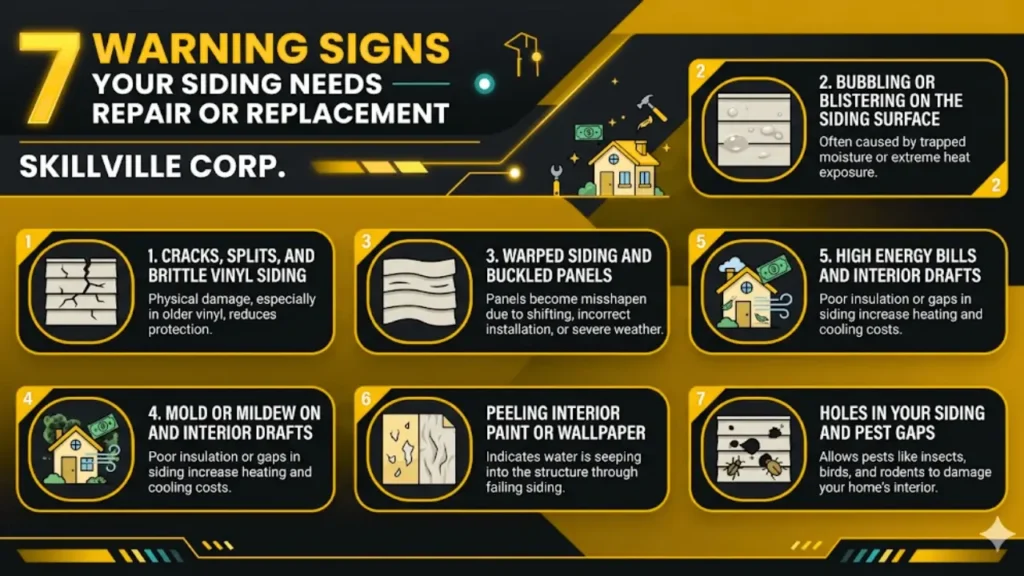
7 Warning Signs Your Siding Needs Repair or Replacement
If you want to protect your home, you need to know the signs of failure. Here are the top signs that you need siding work or a full siding replacement before the first snow falls.
1. Cracks, Splits, and Brittle Vinyl Siding
In Methuen, temperatures frequently plunge into the teens. This extreme cold makes old siding incredibly brittle.
- The Sign: Look for hairline fractures or “shattering” patterns across the siding panels.
- The Winter Risk: This is a clear sign of trouble. Wind-driven snow gets trapped beneath the siding, where it melts and refreezes. This expansion can turn a tiny crack into broken siding that exposes your home’s frame.
2. Bubbling or Blistering on the Siding Surface
If you see signs of moisture like “heat blisters,” it’s a sign that your siding needs immediate help.
- The Sign: Raised bumps or blisters on the siding surface.
- The Winter Risk: This means water is already behind the siding. When this moisture freezes, it can pop siding panels right off the house or cause rotted siding underneath.
3. Warped Siding and Buckled Panels
Quality siding should stay flat. If your house siding looks “wavy,” it’s a warning sign that the barrier is compromised.
- The Sign: Warped siding that pulls away from the wall.
- The Winter Risk: These gaps act as “snow catchers.” Once heavy snow builds up in these loose or missing siding areas, the weight can cause sections to fail entirely.
4. Mold or Mildew on Siding Seams
With high humidity near the Merrimack River, mold or mildew on siding is a common sign of failure.
- The Sign: Green algae or gray fungus growing at the seams of your home’s siding.
- The Winter Risk: While surface growth is minor, mold at the seams means moisture is behind siding layers. If you don’t repair your siding now, that rot will spread into your wall studs all winter long.
5. High Energy Bills and Interior Drafts
Siding is an investment in your home’s efficiency. If you notice a spike in energy bills, your siding may be the culprit.
- The Sign: High heating costs and drafts near your windows or outlets.
- The Winter Risk: Damaged siding allows cold air to bypass your insulation. Siding can help keep your house warm, but only if the seal is tight. If it’s not, it’s time to replace the siding to stop the money leak.
6. Peeling Interior Paint or Wallpaper
Signs of damage aren’t always on the outside. Often, bad siding shows up in your living room.
- The Sign: Peeling paint or sagging wallpaper on an exterior wall.
- The Winter Risk: This is a visible sign that water is getting through the siding material and soaking your drywall. Constant freezing and thawing make these problems with your siding much worse very quickly.
7. Holes in Your Siding and Pest Gaps
Winter drives mice and bugs to look for warmth. Holes in your siding are like an open door.
- The Sign: Small holes or “frass” (sawdust) near the foundation.
- The Winter Risk: Even tiny visible signs of entry can lead to a pest infestation. Having a professional contractor repair the siding can seal these gaps before the rats arrive for the season.
Siding Replacement vs. Repair: What’s Best?
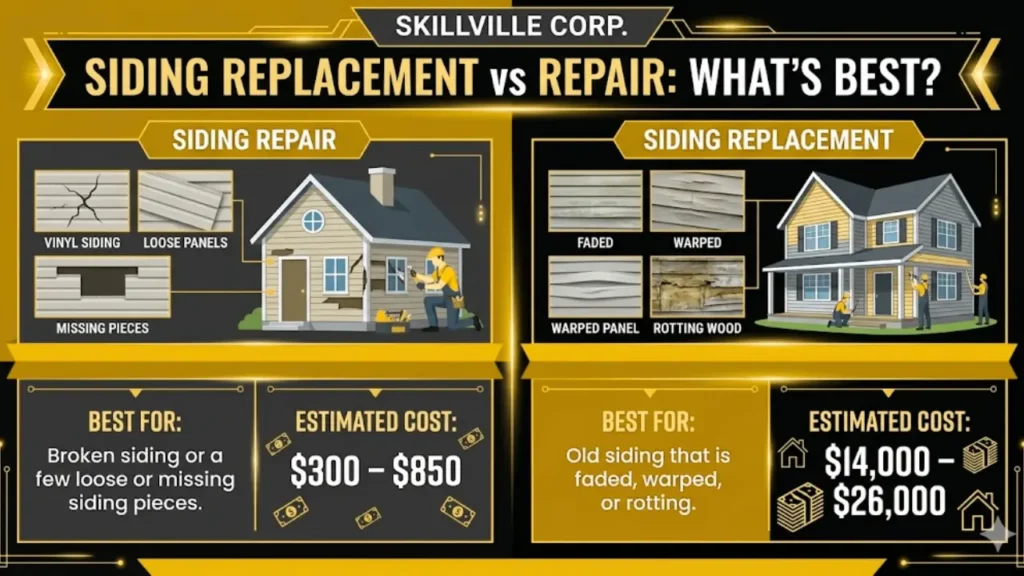
When you inspect the siding, you have to decide between a quick fix and a siding replacement. Siding should last a long time, but it isn’t just about curb appeal; it’s about safety.
| Service | Best For | Estimated Cost |
| Siding Repair | Broken siding or a few loose or missing siding pieces. | $300 – $850 |
| Siding Replacement | Old siding that is faded, warped, or rotting. | $14,000 – $26,000 |
FAQs
Does new siding really lower energy bills?
Yes. Insulated vinyl siding or quality vinyl siding creates a thermal envelope. Replacing faded siding with modern siding options can significantly drop your monthly heating costs.
When is it time to replace your home’s siding?
If you see 7 signs like widespread warping, rotted siding, or interior water stains, it’s time to replace. Siding experts generally suggest an upgrade every 20-30 years, depending on the siding material.
Can I do a siding repair in the winter?
It is possible, but professional siding teams prefer to work on siding before winter hits. Cold weather makes vinyl siding hard to cut and nail without it cracking.
Protect Your Home This Winter
Siding is failing if it no longer keeps the wind and water out. By looking for these 7 signs it’s time for a change, you can invest in new siding before a small issue becomes a total house siding disaster. Whether you need a small siding repair or a full siding replacement, taking care of your siding on your home now is the smartest move a homeowner can make.
Siding isn’t just about curb appeal; it’s your first line of defence. Don’t wait for a January storm to spot signs of trouble. Talk to local siding pros like Skillville Corp. to inspect the siding today.